
Introduction
Parents want practical ways to keep children safe while they learn to use phones independently. Modern family‑safety tools let caregivers check location, review call and message history, manage app access, filter web content, and—when necessary—request short live camera or audio views for context. This guide explains how those features work, how to set them up on mainstream apps, how to combine them into everyday routines, and how to troubleshoot common problems. AppSpyFree is mentioned as an example of a parental control solution available through mainstream app stores; the guidance below focuses on features, workflows, and family communication rather than promoting any single product.
What This Guide Covers
- Core monitoring features parents commonly use
- Step‑by‑step setup workflows for parent and child devices
- Practical routines for daily life and incident response
- Technical limits, battery and data impacts, and troubleshooting
- Data retention, export, and account security
- How to choose an app from Google Play or the App Store
- Image placeholders for WordPress, plus a detailed FAQ section
This content is written to be easy to read, neutral in tone, and formatted for WordPress publishing.
Why Parents Use Phone Monitoring
Parents use monitoring tools for clear, practical reasons:
- Immediate reassurance: Confirm a child’s arrival at school or home.
- Context for concerns: Understand what happened when a child is upset or unreachable.
- Early warning: Detect bullying, grooming, or risky contacts.
- Routine coordination: Confirm pickup arrangements and schedules.
- Evidence preservation: Save logs or recordings when incidents must be reported.
Monitoring works best when paired with clear family rules and open conversations about expectations and privacy.
Core Monitoring Features Explained
Live Location and Geofencing
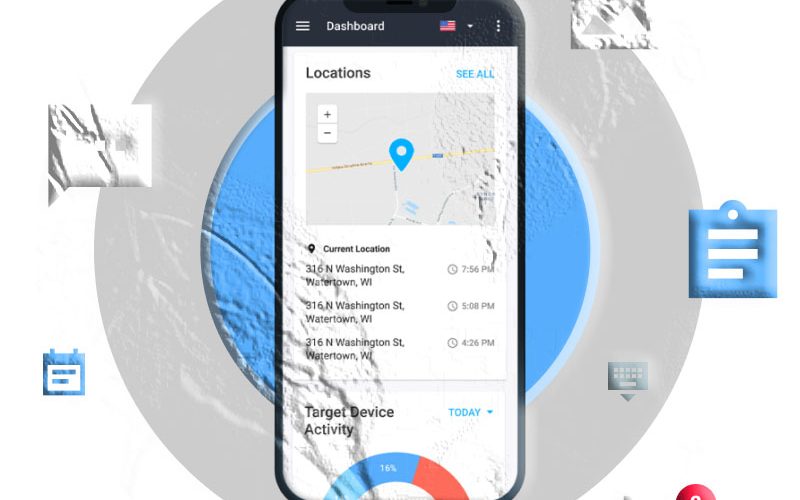
Live location shows a device’s position on a map using GPS, Wi‑Fi, and cell signals. Geofencing creates virtual boundaries that trigger alerts when crossed. Together they let parents confirm presence and receive automatic notifications for arrivals or departures.
What to expect
- Map view with refresh and accuracy indicator.
- Ability to create multiple named geofences with adjustable radii.
- Location history with timestamps and duration at stops.
Call Logs and Call Monitoring
Call trackers present incoming, outgoing, and missed calls with timestamps and durations. Many apps summarize frequent contacts and allow search and export of call history.
What to expect
- Chronological call lists with contact names when available.
- Call duration and missed call indicators.
- Export options for documentation.
SMS and Messaging Monitoring
SMS monitoring captures standard text messages and, where supported, MMS attachments. Monitoring for third‑party messaging apps (WhatsApp, Instagram, Snapchat, etc.) varies by platform and app.
What to expect
- Incoming and outgoing SMS content, timestamps, and attachments.
- Keyword alerts for flagged words or phrases.
- Variable support for app‑based messaging depending on OS and app encryption.
App Usage and Screen Time Controls
App monitoring shows installed apps, daily usage time, notification counts, and top apps by time. App blockers and time limits let parents restrict access during homework or bedtime.
What to expect
- Installed apps list with install dates.
- Per‑app usage statistics and daily totals.
- App blocking, scheduling, and whitelist/blacklist options.
Browser Monitoring and Web Filters
Browser monitoring tracks visited pages and search queries, while filters block categories (adult, gambling, violence) and allow whitelists for trusted sites.
What to expect
- Real‑time browsing history and search logs.
- Category filters and URL blacklists/whitelists.
- Alerts for attempts to access blocked content.
Remote Camera and One‑Way Audio
Remote camera features let a parent request a short live view from the child’s front or rear camera and enable one‑way audio to hear ambient sounds. Many apps also support scheduled ambient recordings.
What to expect
- Live camera view and one‑way audio when permissions are granted.
- Short ambient recordings saved to the parent account.
- Flashlight control in some apps to improve visibility.
Step‑by‑Step Setup Workflow
The exact screens and labels vary by product, but the sequence below applies to most parental control apps available on Google Play and the App Store.
- Install the parent app on your phone from Google Play or the App Store.
- Create a parent account using an email address and a strong password.
- Install the child component on the child’s phone or configure a managed profile as instructed.
- Grant permissions on the child’s device for location, camera, microphone, SMS, and other required features.
- Pair devices using the app’s pairing method (QR code, code entry, or account link).
- Configure settings: geofences, app limits, filters, schedules, and keyword alerts.
- Test features: request a location refresh, make a test call, and run a short live view to confirm behavior.
- Review retention and export options so you know how long logs are kept and how to preserve evidence if needed.
Most apps include in‑app help and store listing instructions to guide each step. If you evaluate a specific product, check its store listing for compatibility notes and installation guidance. AppSpyFree is one example parents sometimes reference; search for it on Google Play or the App Store to review its feature list.
Practical Routines for Everyday Life
Daily Routine Example
- Morning: Quick location check to confirm the child left for school.
- After school: Scheduled ambient recording or location ping to confirm arrival home.
- Homework time: App blocker and browser filters active; notifications muted.
- Evening: Review flagged messages or alerts and discuss any concerns.
Travel or Caregiver Handoff
- Before handoff: Share geofence names and active hours with the caregiver.
- During travel: Enable live location and short live views for a limited window.
- After handoff: Return to scheduled updates to preserve battery.
Incident Response Workflow
- Identify: Receive an alert (keyword, geofence breach, unknown call).
- Gather context: Check recent location pings, call logs, and any recordings.
- Contact: Reach out calmly to the child to ask open questions.
- Escalate: If immediate danger is suspected, contact local authorities.
- Document: Export relevant logs and preserve timestamps if needed for reporting.
Choosing an App: What to Compare
| Attribute | Why it matters |
|---|---|
| Feature set | Confirms the app supports location, calls, SMS, apps, browser, camera, and scheduling. |
| Platform compatibility | Ensures support for the child’s device OS and version. |
| Data retention & export | Needed for documentation and incident reporting. |
| Battery/data controls | Helps manage resource use on the child’s device. |
| Permissions transparency | Clear documentation on required permissions and how they’re used. |
| Support & updates | Active support and frequent updates indicate reliability. |
| User reviews | Real‑world feedback on stability and customer service. |
Search the Google Play Store or the Apple App Store for parental control and family safety apps and compare features and reviews. Look for clear installation guides and recent updates. AppSpyFree is one example parents sometimes reference; review its store listing for feature details and compatibility notes.
Technical Limits and Platform Differences
Android vs iOS
- Android: Many parental control apps can access call logs, SMS, and background services when the child device grants permissions. This often makes feature support broader on Android.
- iOS: Apple restricts direct access to some data (SMS, call logs) for third‑party apps. Solutions for iPhone may rely on managed profiles, cloud backups, or limited features. Always check the app’s compatibility notes for iPhone support.
Encrypted Messaging Apps
End‑to‑end encrypted apps (Signal, some modes of WhatsApp) limit what third‑party monitoring can access. Monitoring solutions may capture metadata or notifications but not decrypted message content in many cases.
Accuracy and Gaps
- Location accuracy varies by GPS signal, Wi‑Fi availability, and device settings. Indoors, accuracy drops.
- Refresh frequency affects timeliness; higher frequency uses more battery.
- Connectivity gaps (airplane mode, no signal) interrupt updates. Plan for occasional gaps and use history to reconstruct events.
Battery, Data, and Performance Considerations
Monitoring features use device resources. Manage impact with these strategies:
- Adjust refresh intervals: Use longer intervals for routine monitoring and shorter intervals only when needed.
- Prefer Wi‑Fi for uploads: Configure the app to upload large files only on Wi‑Fi.
- Use low‑power modes: Some apps offer low‑power tracking modes that reduce GPS usage.
- Limit live sessions: Keep live camera or audio sessions short to conserve battery.
- Educate the child: Explain why certain settings must remain enabled and how to keep the device charged.
Testing the child’s device with the app running for a day reveals real battery impact and helps set realistic expectations.
Data Storage, Retention, and Exporting Records
Storage Options
- Cloud storage: Recordings and logs stored on the app’s servers tied to the parent account.
- Local downloads: Parents can download recordings to their device for offline storage.
Retention Policies
Check how long the app retains logs and recordings. Some apps keep data for a fixed number of days; others offer extended retention on paid plans.
Exporting Evidence
If you need to preserve records for official purposes, confirm that exports preserve metadata (timestamps, device IDs) and that the app supports common formats (CSV, PDF, KML).
Security and Account Protection
Protect the parent account and the child’s device:
- Strong, unique passwords for parent accounts.
- Two‑factor authentication when available.
- Device locks (PIN, fingerprint) on both parent and child devices.
- Limit account sharing and use family features for multiple guardians.
- Keep apps updated to receive security patches.
Review account activity logs if the app provides them and revoke access if you detect suspicious logins.
Troubleshooting Common Problems
Permissions and Background Activity
- Confirm the child’s device has granted required permissions (location, camera, microphone, SMS).
- Disable battery optimization for the child app to prevent the OS from suspending background activity.
Connectivity and Sync Problems
- Ensure both devices have active internet connections.
- Re‑pair devices if the parent console cannot find the child’s device.
Platform Limitations
- iOS may restrict certain features (SMS access, direct call log access). Verify compatibility for iPhones before relying on a single solution.
Storage and Upload Failures
- Check cloud storage quotas and local device storage if uploads fail.
- Prefer Wi‑Fi for large uploads like video clips.
Communicating with Your Child About Monitoring
Open communication preserves trust:
- Explain the purpose: Tell your child monitoring exists for safety and coordination.
- Define boundaries: Agree on which devices and times are monitored.
- Set retention rules: Decide how long logs are kept and who can access them.
- Plan transitions: Discuss how monitoring will change as the child matures.
- Review together: Invite older children to review their own activity logs and participate in setting limits.
Involving children in the process builds digital literacy and reduces resentment.
Legal and Institutional Considerations
- Parental authority: Parents generally have broad rights to manage devices they own for minor children, but laws vary by jurisdiction.
- School policies: Some schools restrict device monitoring on campus; check school rules before enabling monitoring during school hours.
- Third‑party caregivers: Inform babysitters or relatives about monitoring practices to avoid misunderstandings.
- Data protection: Review the app’s privacy policy to understand how location and message data are stored and shared.
If you have legal concerns, consult local guidance or a legal professional.
Best Practices for Long‑Term Use
- Review settings periodically: Update filters and whitelists as your child’s needs change.
- Limit retention: Delete older logs that are no longer relevant to respect privacy.
- Use monitoring sparingly: Reserve intensive monitoring for specific concerns.
- Model good behavior: Demonstrate healthy communication habits as a parent.
- Encourage digital literacy: Teach children how to evaluate sources, spot scams, and protect personal information.
These practices keep monitoring purposeful and respectful.
FAQs
Q: Do I need physical access to my child’s phone to set up monitoring? Initial setup usually requires temporary physical access to install the child component and grant permissions. After pairing, many apps allow remote access to logs and live features.
Q: Will monitoring work across different networks? Yes. Most modern parental control solutions stream and sync over the internet, so parent and child devices can be on different networks. An active internet connection on both devices is typically sufficient.
Q: Can I monitor messages from apps like WhatsApp or Snapchat? Support for third‑party messaging apps varies by platform and by app. Encrypted apps may limit what can be accessed. Check the parental control app’s feature list in the store listing to confirm support for specific messaging platforms.
Q: How often does location update? Update frequency depends on the app’s settings and the chosen refresh interval. Higher frequency gives more timely updates but uses more battery and data.
Q: Will monitoring drain my child’s battery? Continuous high‑frequency tracking and live streaming use more battery. Use scheduled checks, Wi‑Fi uploads, and low‑power modes when available to reduce impact.
Q: Where can I find parental control apps? Search the Google Play Store or the Apple App Store for parental control or family safety apps. Read the developer’s description, permissions, and user reviews to confirm features and compatibility. AppSpyFree is one example parents sometimes reference; review its store listing for feature details and installation instructions.
Final Checklist Before You Start
- Install parent and child components from Google Play or the App Store and follow the developer’s pairing instructions.
- Grant only the permissions required for the features you intend to use.
- Create named geofences and set active hours to reduce unnecessary alerts.
- Test live features with short sessions to confirm behavior.
- Review retention settings and export options for recordings you may need to preserve.
- Secure the parent account with a strong password and enable two‑factor authentication if available.
- Create a family agreement that explains monitoring rules and expectations.
- Revisit monitoring levels as the child matures and demonstrates responsibility.
Monitoring a child’s phone can provide timely information that helps parents protect and guide their children. Pair technical tools with open conversations, age‑appropriate boundaries, and a plan to reduce monitoring as trust grows. Evaluate apps carefully in the official app stores, confirm platform compatibility, and keep account security and data handling practices up to date. AppSpyFree is one example of a parental control app parents sometimes reference; compare it with other options on Google Play and the Apple App Store to find the best fit for your family.